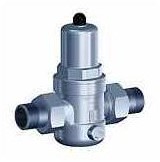
How does a pressure reducing valve work?
In a spring-loaded valve, the spring pushes a diaphragm against the valve seat. When the outlet pressure drops, the diaphragm moves downward and the valve opens. When it rises, the diaphragm lifts and the valve closes. In pilot-operated types, a small pilot valve controls the main valve even more precisely.
What does a pressure reducing valve do?
It stabilises the working pressure and protects downstream equipment (pumps, cylinders, piping) against overpressure and pressure spikes. This prevents failures and extends the service life of your installation.
Pressure reducing valve for water
In water installations, a pressure reducing valve prevents damage to pipes and appliances by reducing the high supply pressure to a stable level, for example 3–6 bar. These valves are available in brass or stainless steel and with connections from ½" to 2". Strong brands such as Goetze Armaturen, Spirax Sarco and ARI Armaturen stand out for their high accuracy, long service life and proven reliability in critical applications. Thanks to their wide applicability and consistent quality, they are used worldwide in both domestic and industrial installations.
Pressure reducing valve for compressors
At the outlet of a compressor, a pressure reducing valve ensures a stable compressed-air pressure, even with fluctuating inlet pressure or demand. Ebora supplies compact air-preparation valves from Festo, Camozzi and Norgren with precise adjustment ranges of 0.5–12 bar.
Our range of pressure reducing valves
First scroll through the overview and compare types, then use the links to configure your valve:
- Pressure reducing valves for water
- Pressure reducing valves commonly used on compressors
- Spring-loaded and pilot-operated designs
- Process connections in brass, stainless steel, PVC-U, PVDF, PP
Buy a pressure reducing valve
Want to purchase a pressure reducing valve right away? In our webshop you will find valves for water, compressed air and industrial liquids. Use the filters to select your desired pressure range, material and connection size. For tailored advice our team is ready via contact.
Frequently asked questions about pressure reducing valves
What is a pressure reducing valve?
A pressure reducing valve is a control valve that automatically lowers a high or fluctuating inlet pressure to a stable, set working pressure. It ensures that pipes, pumps and other components are not exposed to damaging pressure spikes. Thanks to the constant outlet pressure, your installation operates reliably and equipment lasts longer. Pressure reducing valves are widely used in water lines, compressed-air systems and industrial processes.
Where do I use a pressure reducing valve for water?
A water PRV reduces the often high mains pressure to a stable level, usually around 3 to 6 bar. This prevents damage to pipes, taps and connected devices such as boilers or washing machines. In homes it provides safe and comfortable water pressure, while in sprinkler systems and process-water networks it preserves system reliability. This extends the installation’s service life and prevents unnecessary failures.
Why use a pressure reducing valve on a compressor?
A PRV on a compressor keeps the compressed-air pressure constant even when inlet pressure or air demand varies. Without a valve the pressure can rise too high, causing wear or damage to connected equipment. The valve therefore protects cylinders, valves and piping against overload. It also contributes to more efficient and reliable operation of your compressed-air system.
Where can I buy a pressure reducing valve?
You can easily order a PRV in our webshop, where you can filter by pressure range, material and connection size. This helps you quickly find the valve that fits your application, whether for water, compressed air or industrial liquids. Ebora works with trusted brands and offers a wide range of versions. If you need advice, our team is ready to help you make the right choice—contact us via contact.
Advice and configuration to fit your needs
Our valve specialists recommend the ideal type, material and connections for your application. Customers who involve us early reduce failure costs and optimise process stability. A few free consultation slots are still available this week.
Schedule free consultation


